
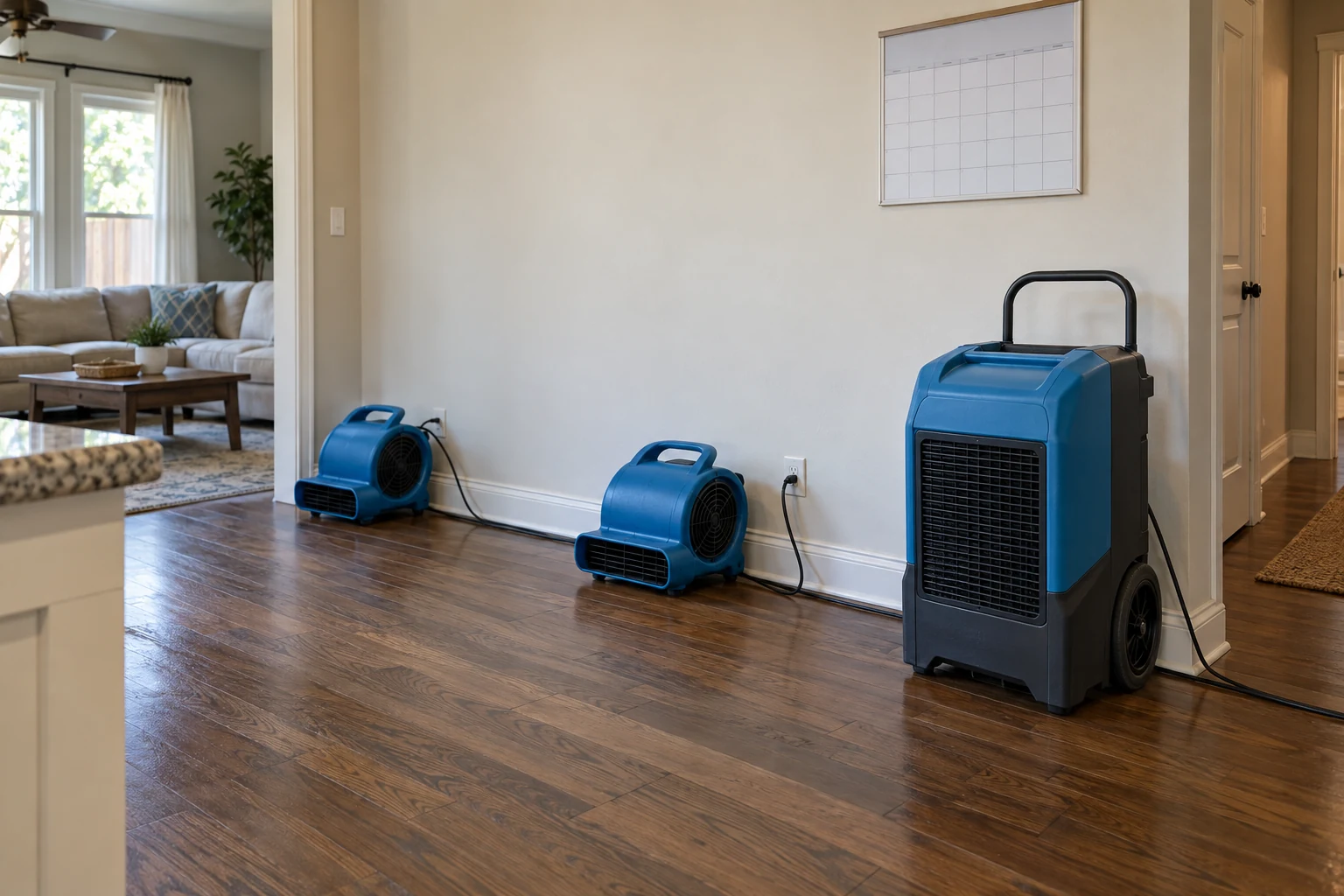
The clock starts after the source is controlled
Drying cannot finish while a pipe, roof opening or appliance continues to add water. First stop or contain the source when safe, remove standing water and determine what materials became wet. Your technician may then set up extraction, air movement and dehumidification. A room can look normal on top while pad, subfloor, insulation or the back of drywall remains wet. Tell your technician how long the water may have been present, including a slow leak that was discovered late.
Why materials dry at different rates
Open, hard surfaces can release water differently from carpet pad, wood, cabinets or closed wall cavities. Humidity, temperature, airflow and access also matter. Equipment needs a path for evaporated moisture to leave the room; a fan alone may move air without adequately dehumidifying it. Your technician may lift flooring, open a cavity or remove unsalvageable material when measured moisture remains trapped. That decision should follow the material and water condition, not a fixed number-of-days rule.
What does a completion check look like?
Ask where readings will be taken, what dry reference material is used, and whether measurements are tracked across visits. Touch, color and the absence of puddles do not establish dryness inside a layered assembly. EPA's flooded-home guidance advises against sealing or painting flooded cavities until they are completely dry. Ask your technician to explain when equipment can be removed and when reconstruction can start. If the source was contaminated, cleaning and material removal may precede ordinary drying.
The 24–48 hour guidance is not a finish promise
EPA encourages drying wet materials promptly, often within 24 to 48 hours after a leak or spill, to reduce the chance of mold growth. That is a prevention target, not a guarantee that every structure will be completely dry in two days. Your technician may need more time after severe or concealed damage, and a delay can change the cleanup plan. Avoid reoccupying a hazardous room or reinstalling finishes only because a calendar date has passed.
What to tell your technician
Give the address, source, affected rooms, water condition and any previous extraction or repair when you call, and your technician takes it from there. Ask how hidden moisture will be measured and what will be documented before finishing. The structural drying service explains the equipment; the wet floors guide explains why pad and subfloor need separate attention.
Sources
Sources for water damage drying time, checked 2026-09-25.