
Printable first-call checklist
Keep this list with a phone and insurance record. Print this page from your browser if useful.
- Stay clear of water near electricity, a sagging ceiling or an unstable floor.
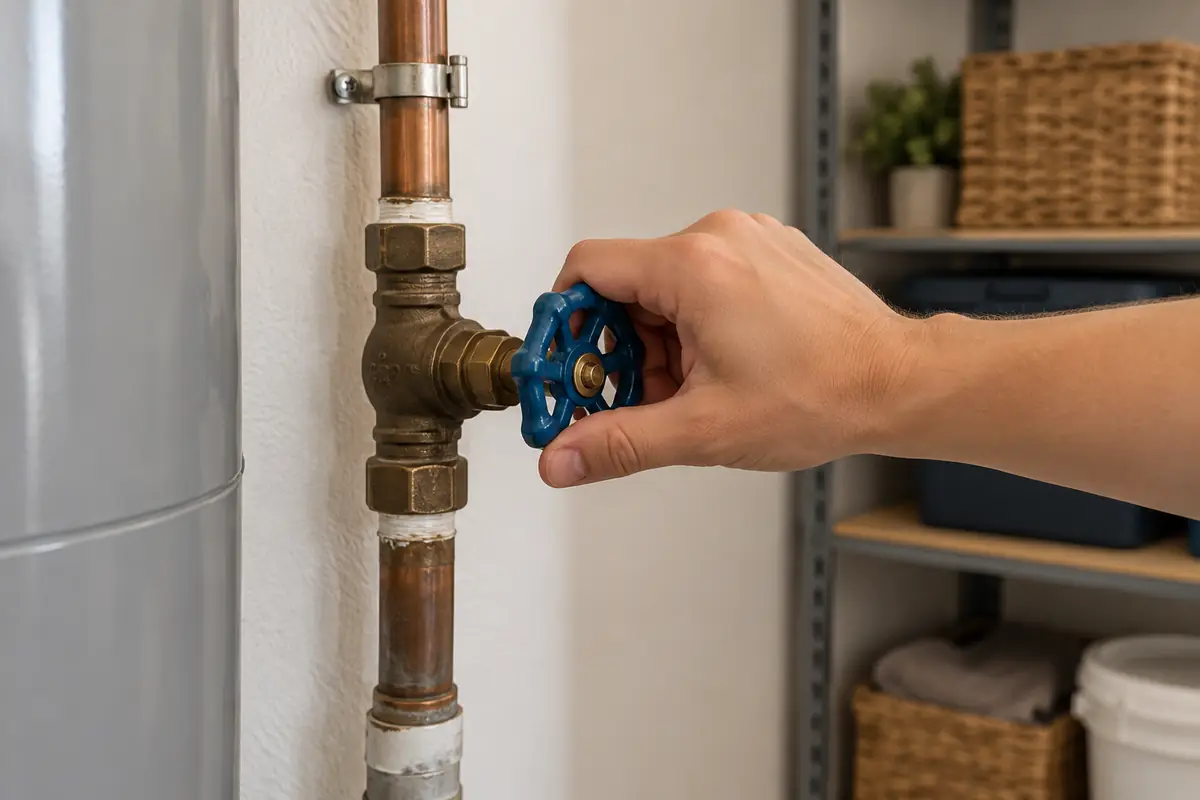
- Stop an accessible source only from a safe, dry place.
- Note the full address, suspected source, time noticed and rooms affected.
- Say whether the water may be sewage or outside floodwater.
- Photograph visible damage only from a safe position; keep a short timeline.
- Ask your technician what they will inspect and when the written scope and price will be ready.
Protect people before property
Look at the area before stepping into it. Standing water near outlets, appliances, extension cords, panels, or other electrical equipment can create a shock risk. A sagging ceiling, damaged stair, unstable floor, or strong sewage odor also calls for distance. Keep children and pets out of the affected space. If there is an immediate danger, leave and follow local emergency instructions.
Do not reach through water to unplug equipment. Do not touch damaged wiring or a wet electrical panel. If you are unsure whether power can be isolated safely, wait for qualified help. A few saved belongings are not worth entering an electrical or structural hazard.
Stop the source only when it is safe
If a toilet supply, washing-machine hose, water heater, or sink connection is clearly leaking and the shutoff is dry and accessible, closing that fixture valve may slow the flow. If the break is at the main line, the source is hidden, or the valve is in standing water, step back and ask the appropriate utility or professional for guidance. Never assume the visible puddle shows the full path of the leak.
For a city water issue, use the municipality's current utility or emergency route. Garland, Mesquite, Richardson, Rockwall, and Rowlett each publish their own water contacts and procedures. A city shutoff report and a restoration call serve different purposes: the utility addresses public service or meter issues, while your technician evaluates the water inside the home.
Move what you can without making the damage worse
Move lightweight, unpowered items to a dry surface if the path is safe. Lift furniture legs onto blocks or foil only when the furniture is stable and the water is not contaminated. Keep wet fabrics separated from dry contents. Do not drag heavy furniture across swollen flooring, disturb a ceiling, or pull up materials that may contain hazardous contaminants.
Open interior doors if they move freely and do not touch swollen jambs. Avoid turning on fans or heating and cooling equipment when the water may be sewage or when the equipment could spread contamination. Ask your technician what can be moved and what should stay in place for inspection.
Make a simple record
Photograph the source, the room, the water line, damaged surfaces, contents, and any meter or appliance display that helps explain the event. Take a wide image before moving items, then closer images of visible damage. Write down when you noticed the problem, whether the water is still moving, and what you did to stop it.
Keep the record factual. “Water was under the dishwasher at 9:15” is more useful than guessing how long a hidden leak existed. If you rent, notify the owner or manager using the required method. If insurance may be involved, ask the insurer what documentation and claim steps it wants.
What not to do with contaminated water
Do not use a household shop vacuum, mop, or fan to handle sewage or water that may contain chemicals. Do not mix cleaners. Keep contaminated materials away from clean belongings, and avoid touching them without the protective guidance appropriate to the situation. Your technician can decide whether the water needs specialized extraction or containment.
A musty smell does not by itself prove mold or mean a particular treatment is needed. Damp materials should be assessed and dried or removed as appropriate. Texas requires a license for mold assessment and mold remediation under Occupations Code chapter 1958, with limited exemptions, so ask who will handle visible mold. Describe odors and dampness on the call so your technician can plan for them.
When should you call?
Call when water is active, has reached flooring or drywall, has entered a cabinet or wall, came from a storm or sewage line, or is still unexplained after the visible puddle is gone. Give the service address, your callback number, source, rooms, approximate timing, water condition, and safety concerns. One of our local restoration professionals takes it from there.
Your technician may ask for photographs or explain what to protect until the inspection. You'll hear the visit timing on the call, and the inspection, pricing and the work itself are set directly with your technician.
Follow the next instruction carefully
Write down who you spoke with and what was requested. Ask whether you should also contact a plumber, utility, insurer or landlord. Keep walkways clear only if doing so is safe, and do not remove wet drywall or flooring just to make the room look better. Controlled removal and drying depend on the source, water condition, construction, and hidden moisture.
For related explanations, see emergency water removal and structural drying and dehumidification. If the source is a burst line, the burst pipe guide explains why plumbing repair and drying can be separate steps. The right first move is the one that keeps people safe and gives your technician an accurate picture.