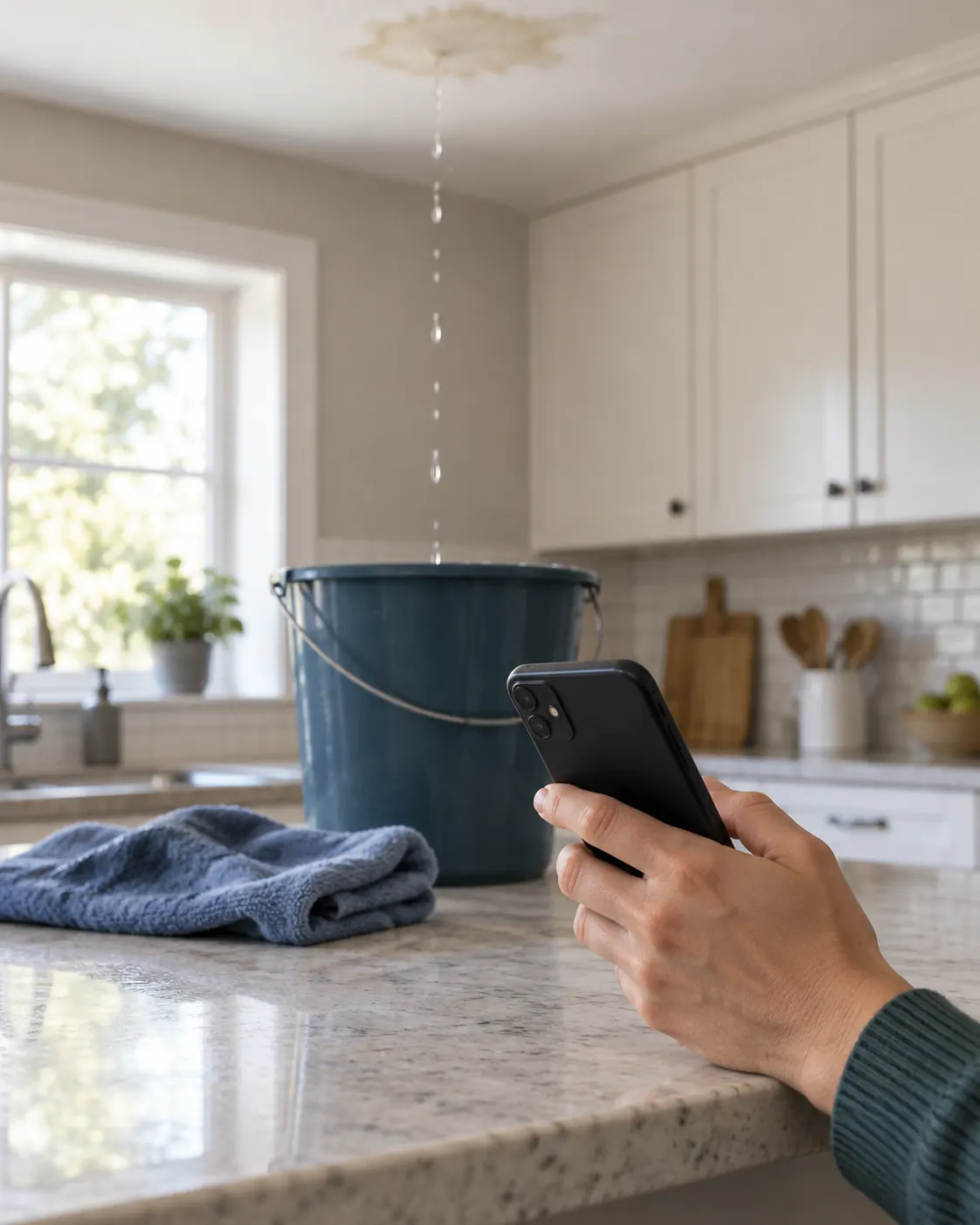
Describe the situation clearly
Start with the address and the part of the home affected. Say what caused the water if you know, whether it is still entering, how long it has been present, and whether it reached flooring, drywall, cabinets, belongings, or an electrical area. If the water may be sewage or flood water, say that at the start. A clear description helps match your call with the right provider in our network.
Talk with one of our local restoration professionals
Your call goes to one of our local restoration professionals serving your area, who goes over the water source and the address, then sets the visit time with you and explains what the work will involve.
The call also gives your technician a chance to distinguish a plumbing repair from the water-damage work that follows. Your technician may need access to rooms, closets, floors, or wall areas; ask before moving furniture or removing materials. Do not agree to work you do not understand. Request a clear explanation of the inspection, drying approach, and what is still unknown.
Ask about the next steps
Your technician should explain what happens next for that request, which may include an inspection, moisture checks, water extraction, controlled removal of damaged materials, or drying equipment. Ask what areas should be kept clear before the visit and which observations should be photographed. Your technician walks you through timing, pricing and the work plan.
Have useful details ready
Keep the service address, a callback number, the suspected source, the time you noticed the problem, and a short list of affected rooms nearby. Note whether the water is clean-looking, contaminated, or connected to a storm. If you rent, ask the property owner or manager about its process. If an insurer is involved, save photos and ask the insurer what documentation it requires. Mention any photos or a rough timeline on the call, since your technician may ask for them later.
Treat safety as the first step
Do not enter standing water near electrical equipment, touch damaged wiring, or investigate a ceiling that is sagging. Follow local emergency instructions when flood water or structural danger is involved. Shut off a known fixture only when doing so is safe. Your technician can explain what they need to inspect once the immediate hazard is controlled.
Confirm the next step before ending the call
Ask your technician to recap the next step, the visit time, and whether a plumber or other trade must first stop the source. Confirm the callback or visit time, and anything about insurance, before you hang up.
Before authorizing the work
Ask your technician to identify the water source they will address, the rooms and materials they will inspect, and whether extraction, daily drying checks, source repair and rebuilding are separate charges. Confirm the visit window and written estimate process on the call; the final price comes from the written estimate.