
Sudden or gradual: what Texas regulators say
The Texas Department of Insurance's consumer tip on water damage and mold says most homeowner and renters policies cover sudden and accidental water damage, and gives a burst pipe, a toilet overflow and a broken washer hose as examples. The same page says most home policies don't cover damage from gradual leaks or seepage. So the first thing an adjuster wants to know is how the water got there and how long it had been happening, not simply that a floor or wall is wet.
Write down what you know without filling gaps with guesses: when you first saw the water, what was happening shortly before, whether the source is still active, and which rooms or materials are affected. A slow drip under a sink and a supply line that burst this morning are different stories, and the policy language and the facts of the loss decide which one you have.
Photograph before conditions change
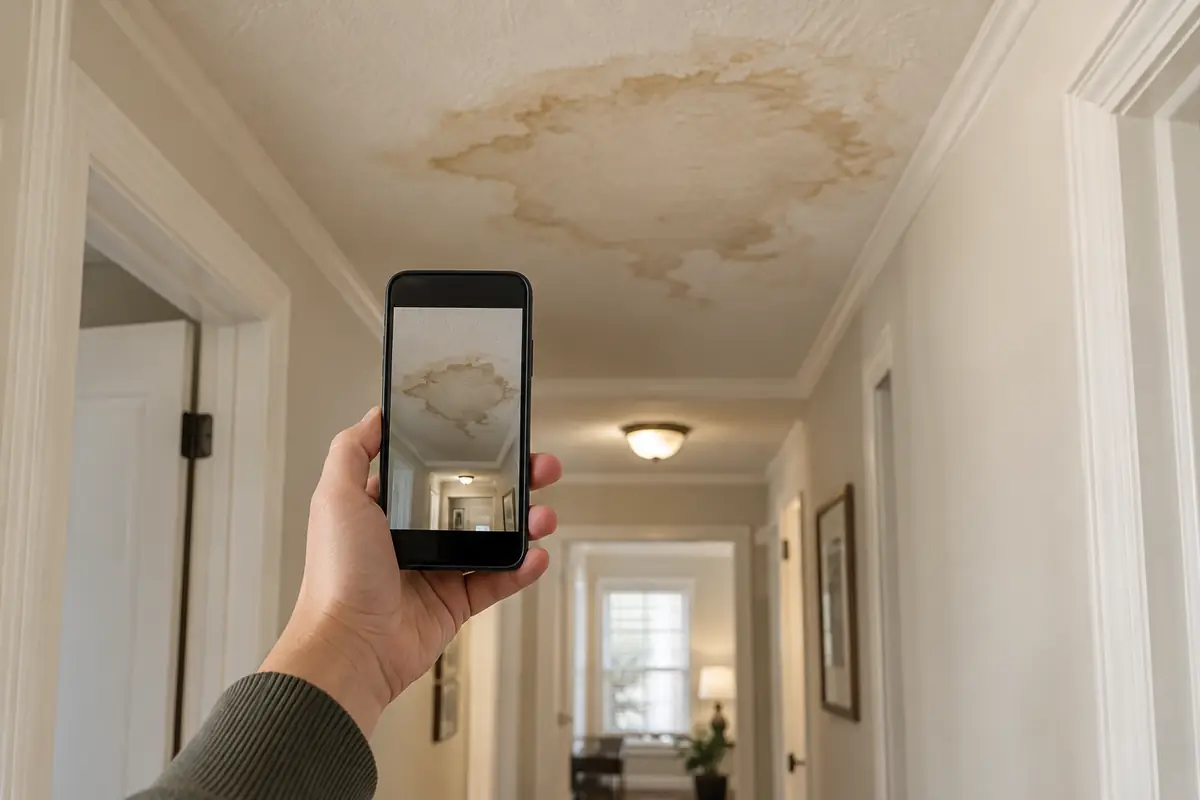
TDI's advice is to take pictures or video before making any repairs, and not to throw away damaged items until your adjuster has seen them. Take wide photos that show the room and closer ones of stains, standing water, swollen trim, damaged flooring, wet contents and the suspected source. A short video can show an active drip or the path the water is taking.
If an item has to go because keeping it is a health or safety problem, photograph it from several angles first and note its approximate age and condition. Do not open energized equipment or drag saturated materials around just to improve a photo.
When should you call the insurer?
Soon. TDI says you usually must report water damage that was hidden from view within days after you first see it, so a leak found behind a cabinet or under flooring should be reported promptly even while you work out the cause. The same page asks you to stop the water and start removing standing water and drying the area to prevent more damage and mold.
When you report, ask whether the insurer wants a claim opened now, which documents it needs, whether an adjuster will inspect, and whether it has preferred vendors or rules for emergency work. Record the claim number and the name of the person who gave each instruction, and keep copies of photos, messages, estimates and receipts.
A restoration call answers a different question
The insurer handles policy and coverage questions. Your technician looks at the physical condition: how far water travelled, which materials are wet, whether the water may be contaminated, and what extraction or drying the job needs. You can call while the claim is being set up; your insurer, not your technician, decides whether the policy pays. Your technician goes over timing, scope and price with you.
Describe the source honestly: pipe, appliance, roof, storm, sewer or unknown. A plumbing repair and the water-damage work can be separate jobs. If the source is not under control yet, have a plumber or the city utility stop it, and call us about the wet rooms at the same time.
Flood water is a separate policy
TDI's flood insurance page is plain that a home insurance policy doesn't cover flood damage, and the mold tip adds that mold from a flood isn't covered for the same reason; you would need a separate flood policy. Water that rose from outside, ran in off the yard or came up from an overflowing creek is a flood question, while a pipe that burst in the wall is a homeowners question.
For a Garland or Lake Ray Hubbard address, describe where the water came from and how it entered, and ask the insurer which policy applies. If a road, public drain or water main was involved, the city or utility has its own reporting route, and that report sits alongside the insurance claim rather than replacing it.
Mold after a covered leak
According to the same TDI tip, if mold develops on an item damaged in a covered loss, that mold is covered, but most home policies don't include mold cleanup and testing after the damaged item has been removed. That is one more reason to get wet materials dried or removed quickly and to ask the insurer before paying for mold testing on your own.
Texas also licenses mold assessment and remediation work, so if your technician proposes mold work, ask whether they hold that license. The sewage backup guide explains when the small-area exemption applies.
Keep the record together
Keep one folder with photos, a short timeline, the policy and claim contacts, provider conversations, receipts and notes about what was moved or thrown out. Ask before signing a work authorization you do not understand, compare the written scope with what you saw, and ask who will explain any changes. If a coverage dispute or legal question comes up, use the insurer's escalation process or get advice from a qualified professional.
Sources
Sources for insurance & water damage claims, checked 2026-09-26.